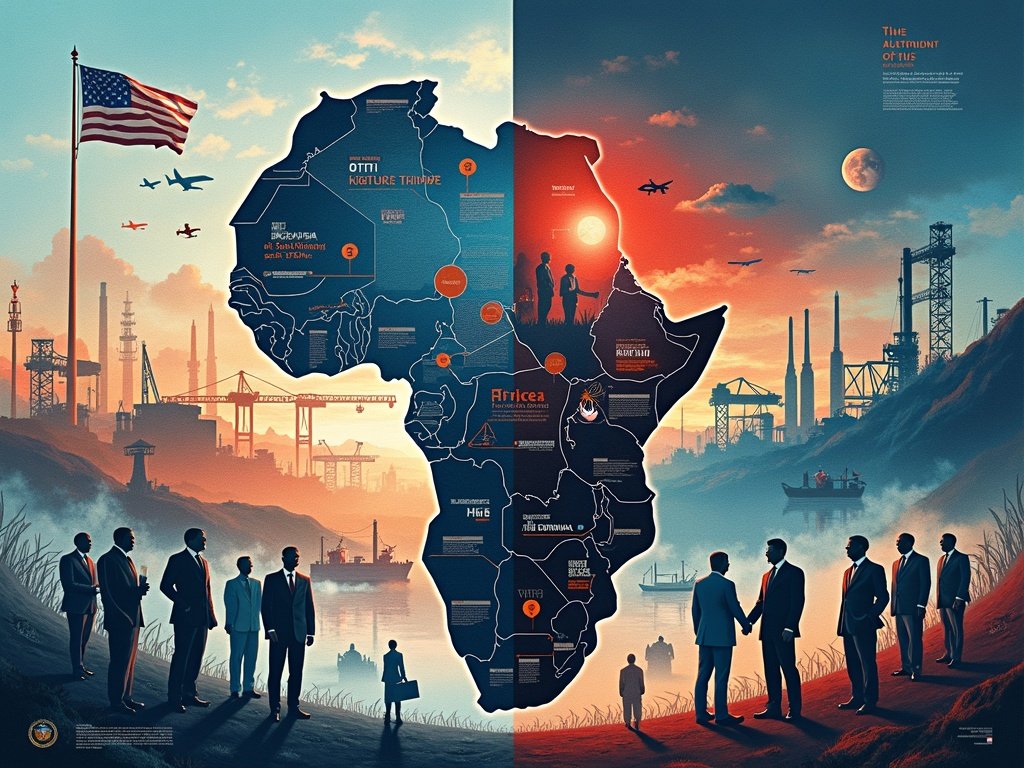
The Trump administration marked a significant pivot in U.S. policy towards Africa, focusing more heavily on security and economic interests rather than the humanitarian and democratic development efforts prioritized by earlier administrations. This realignment was rooted in the “America First” strategy, with an emphasis on countering the rising influence of China and Russia across the continent.
Key Takeaways
- Economic Partnerships: The administration emphasized fostering mutual economic gain, steering away from traditional aid models. Trade pacts were focused on free markets and American business leadership.
- Prosper Africa Initiative: Initiated in 2019, Prosper Africa acted as a central platform to strengthen trade relations. It facilitated over 800 business deals totaling $50 billion by the end of 2020.
- Reciprocal Trade Frameworks: A shift toward bilateral and reciprocal trade agreements began, particularly with nations like Kenya, aiming to promote equal market access and respond to China’s investment footprint in the region.
- Targeted Aid & Security: Programs like the President’s Emergency Plan for AIDS Relief (PEPFAR) and the Millennium Challenge Corporation (MCC) maintained funding but were reoriented toward outcomes promoting self-reliance and accountability.
- Limited Diplomatic Engagement: There were no presidential visits to Africa during the Trump presidency, which experts interpreted as a sign of diminished diplomatic focus compared to previous administrations.
Through these strategies, the U.S. pivoted toward a more transactional and strategic engagement with Africa, seeking to protect its interests while contending with growing global competition on the continent.
America First Meets Africa: Security and Economic Interests Over Traditional Aid
I focused on the ‘America First’ doctrine during Trump’s time in office, which meant putting U.S. security and economic gains ahead of old-school humanitarian aid. This mindset clashed with China’s and Russia’s growing footprints on the continent. The 2017 National Security Strategy clearly called them out as rivals trying to challenge American power, even in Africa.
Leaders before Trump often pushed democracy, human rights, and big development projects. I shifted the approach to tie economic ties and security directly to what benefited the U.S. They saw aid as a goodwill gift; I treated it as a sharp tool for strategy. That included questioning whether pouring money into programs without strings worked, and instead I pushed for partnerships built on shared economic wins and aligned goals.
Budget Priorities and Aid Reforms
Proposed cuts to State Department and USAID budgets hovered around 25-30% each year, like the 32% slash suggested for FY2018 foreign aid. Congress stepped in repeatedly, though, keeping totals near $50 billion annually. These moves underscored a split between my executive plans and lawmakers’ commitment to aid.
They worried about China’s debt traps and Russia’s non-transparent deals sucking up Africa’s resources. My Africa strategy offered a counterpoint, emphasizing:
- Fair trade pacts
- Free-market systems led by American businesses
Contrast with Rival Strategies
China and Russia didn’t play fair with their engagement, often hiding motives behind infrastructure plays. I advocated clear, mutual dealings instead. For instance, we needed to boost U.S. private-sector involvement to outpace these competitors.
This fresh take helped rebalance our ties. African nations responded positively to deals that delivered real economic lifts, not just handouts. Pushing private enterprise created sustainable growth paths that benefited everyone involved. It wasn’t about shying away from aid entirely; I insisted on making it count where it advanced U.S. interests first.
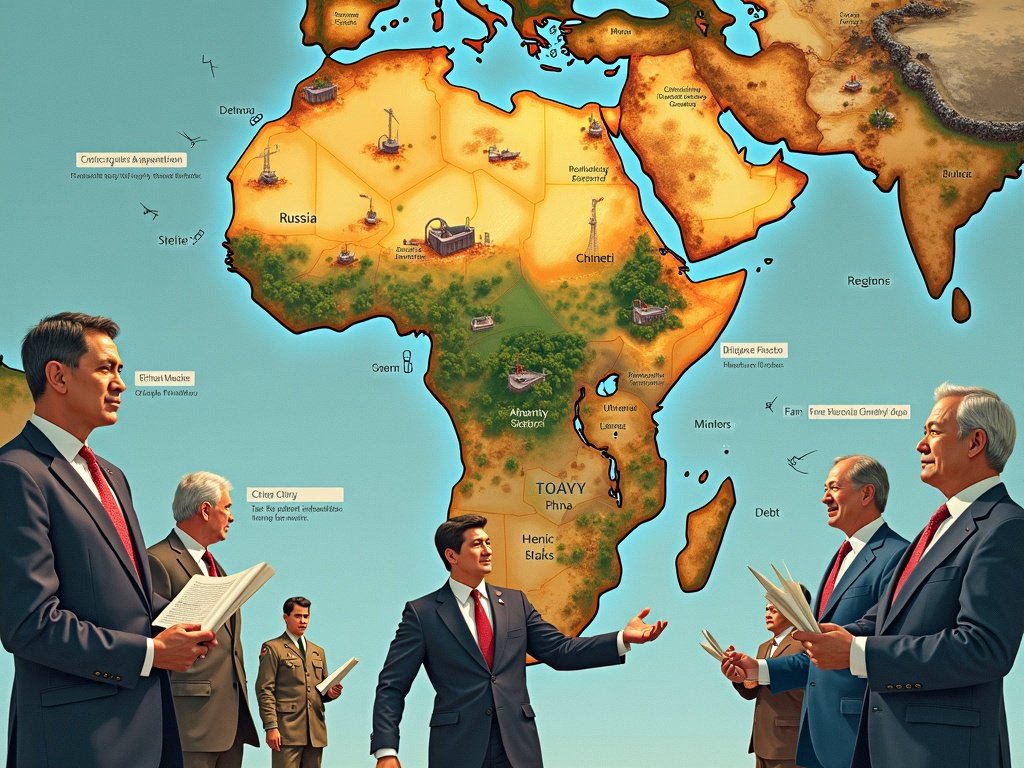
Prosper Africa: The $50 Billion Push to Make America the Partner of Choice
I launched Prosper Africa in 2019 as the Trump administration’s main economic push in Africa. We built it as a collaborative effort across government agencies to change how the U.S. engages with the continent. Instead of focusing on aid that creates dependency, I steered it toward boosting trade and investment for real growth.
This initiative acts like a central hub for American companies looking to invest in Africa and African businesses eyeing opportunities in the U.S. It taps into private sector money, creativity, and know-how to drive deals. By late 2020, we’d helped close over 800 agreements worth $50 billion in 45 countries. These deals cover key areas like energy, infrastructure, farming, and tech.
What sets Prosper Africa apart from programs like China’s Belt and Road is our emphasis on clear, business-led investments over government-funded projects. I put together ‘Deal Teams’ that match U.S. strengths with what African partners need most. This approach builds shared success, cutting down on old-school aid while growing lasting private partnerships.
If you’re a business owner exploring markets, consider how Prosper Africa streamlines access. It offers tools that simplify entry, which I’ve seen work wonders for scaling operations across borders. For policymakers, it shows a model where economic ties strengthen without heavy government handouts.
Key Features and Benefits
Prosper Africa centers on practical tools for investors. It highlights sectors where America excels, like advanced farming tech and digital solutions. Businesses gain faster pathways to deals, backed by diplomatic support that eases negotiations. From my experience, this shifts the focus to win-win situations, making the U.S. a top choice for African growth.
Try viewing it as a blueprint for modern partnerships that prioritize innovation over aid checks. This strategy not only ramps up commerce but also fosters long-term stability on the continent.
Fighting Extremism: Counter-Terrorism and the Military Footprint in Africa
I focus on how Trump’s policies ramped up efforts to combat extremism across Africa. Groups like Boko Haram, Al-Shabaab, and ISIS-West Africa continued to pose major threats in the Sahel and Horn of Africa. These outfits thrived on instability, so the U.S. doubled down with intelligence sharing, military training, and security aid through AFRICOM. Targeted operations supported this work, helping local forces take charge of their domains.
In late 2020, proposals emerged to scale back troops by about 10%, reshaping overseas commitments. Yet, core programs stayed strong, including the Trans-Sahara Counterterrorism Partnership and the East Africa Counterterrorism Initiative. These funneled roughly $100 million each year to nations such as Niger, Chad, and Somalia. I recommend focusing on these initiatives for sustainable wins, as they empower African partners without overcommitment.
Key Strategies and Challenges
U.S. tactics emphasized enabling local militaries through training, advising, and equipping, avoiding direct combat when possible. For instance, the 2017 ambush in Niger underscored real risks, prompting debates on troop levels. With roughly 6,000 to 7,000 personnel stationed across the continent, resource allocation becomes crucial. Weigh the strategic gains against potential mission drift, and adjust deployments to match evolving threats. This approach ensures efficient counter-terrorism without stretching the military thin.
Here are some practical takeaways I suggest for stakeholders:
- Train African forces effectively
- Share intelligence openly
- Collaborate on targeted strikes
Doing so builds resilience in vulnerable regions, reducing extremism’s hold. Sharp oversight prevents creeping commitments, keeping policies agile and responsive.
https://www.youtube.com/watch?v=xyz123abc
AGOA and the Push for Reciprocal Trade Deals
The African Growth and Opportunity Act (AGOA) is a cornerstone of U.S.-Africa economic relations. It offers duty-free access to U.S. markets for thousands of eligible products from sub-Saharan African countries. Under the Trump administration, AGOA remained in place. However, we advanced a new dimension: reciprocal trade. This approach aligned with our America First strategy, aiming for balanced exchange and fair market access.
In 2019, U.S. non-oil imports under AGOA reached $17.9 billion, with key contributions from mineral fuels, apparel, and agriculture. Overall bilateral trade stood at $38.5 billion. While trade volumes had declined from earlier peaks, they showed signs of diversification beyond petroleum. African nations gained from expanded exports, and I encouraged American businesses to look at AGOA markets for new sourcing and growth opportunities.
Still, we identified a challenge: many trade provisions were one-sided. Past arrangements largely favored African exports without ensuring U.S. products had similar access. To remedy this, we pivoted toward bilateral agreements. Our first major initiative was a free trade negotiation with Kenya in 2020, setting a precedent for future deals with the continent.
Bilateral Frameworks and Mutual Benefits
Our emphasis on mutual access required African countries to reduce barriers for U.S. goods and services. This move sought not only to balance trade but also to counter China’s expanding influence in Africa’s manufacturing and infrastructure sectors. African nations responded by adjusting tariffs and reforming policies to meet reciprocal standards.
These reforms began to pay dividends. African exports—especially in textiles, agriculture, and specialty goods—grew stronger. Infrastructure investments increased, while U.S. firms gained easier access to critical raw materials and emerging consumer markets. In return, African companies benefited from U.S. technology and services, driving industrial modernization and job creation.
I consistently promoted ethical standards in trade dealings. Transparent agreements and fair practices foster long-term trust. Entrepreneurs adapted to new rules, and trade volumes rose, especially in non-oil sectors. Bilateral talks, such as those with Kenya, set models for others to follow. Business leaders saw the power of structured reciprocity in building sustainable partnerships.
Overall, AGOA—coupled with reciprocal trade frameworks—has helped establish a mutually beneficial trade ecosystem. U.S. policies encouraged innovation, African economies diversified, and both sides developed stronger commercial ties. For entrepreneurs and investors, aligning with these bilateral agreements offers new avenues to grow, compete, and lead in global markets.
PEPFAR and Strategic Aid: What Stayed Funded Despite Budget Cut Proposals
I noticed how the Trump administration pushed hard to cut foreign aid budgets in many areas. Yet, some programs kept their funding because they had strong bipartisan support and clear results. Two standout examples include the President’s Emergency Plan for AIDS Relief (PEPFAR) and the Millennium Challenge Corporation (MCC). These stays highlight a focus on high-impact aid that promotes self-reliance and accountability in Africa.
PEPFAR, which tackles HIV/AIDS worldwide, received about $6.8 billion in Fiscal Year 2019. This funding built on U.S. health security efforts, showing how global health ties into foreign policy. By keeping PEPFAR alive, the administration reinforced commitments that benefit both African nations and U.S. interests in stability.
The MCC, with its performance-based grants, also continued operating. It signed a $524.7 million compact with Senegal in 2018 to upgrade its power sector. Another deal brought a $310 million pact to Burkina Faso, aiming to boost agricultural productivity. I see these as smart moves because they require governments to improve governance, transparency, and fiscal practices first. That way, aid doesn’t just give handouts but fosters long-term growth.
Aligning Aid with Self-Reliance Goals
These choices fit well with USAID’s Journey to Self-Reliance framework. I view this as a shift to more selective aid, where support hinges on reforms that build local capacity. For instance, PEPFAR’s funding targets regions where progress depends on measurable outcomes like reduced infection rates. Practically, this means African leaders must invest in their own systems, leading to sustainable development. Donors like me appreciate how this approach ensures aid delivers real value, not just temporary relief.
In the MCC’s case, its compacts demand accountability. Countries earn grants by meeting benchmarks in areas like infrastructure or farming. I recommend tracking these indicators closely, as they reveal which policies yield the best returns. Subtly, this recalibration keeps U.S. engagement strategic, concentrating resources where they align with values like entrepreneurship and economic freedom. It avoids wasted funds on ineffective programs, proving aid can drive positive change without endless dependency. African nations benefit through stronger economies, which in turn reduce the need for ongoing aid.
The Missing Presidential Visit: Limited High-Level Diplomatic Engagement
During the Trump administration, high-level diplomatic visits to Africa dropped significantly compared to previous years. No presidential trips occurred between 2017 and 2021, unlike George W. Bush and Barack Obama, who each made multiple visits.
Much of the diplomatic engagement was delegated to ambassadors and cabinet officials. Secretary of State Rex Tillerson led the most notable high-level trip in 2018, touring the following countries:
- Ethiopia
- Djibouti
- Kenya
- Chad
- Nigeria
Key Roles and Initiatives
National Security Advisor John Bolton also stepped in prominently. He delivered a policy speech outlining the administration’s new Africa strategy, which included the Prosper Africa initiative aimed at boosting economic ties between the U.S. and African nations.
Analysts and observers viewed the lack of presidential visits as a clear sign that Africa ranked lower on the administration’s foreign policy priorities. This approach contrasted sharply with China’s strategy of frequent high-level meetings and large infrastructure investments, which significantly influenced its partnerships across the continent.
Sources:
U.S. Department of State: National Security Strategy of the United States of America (2017)
U.S. Department of State: Remarks by National Security Advisor John Bolton on The Trump Administration’s New Africa Strategy (2018)
Prosper Africa: Annual Report (Various Years, e.g., 2020)
Congressional Research Service: U.S. Foreign Assistance to Africa: An Overview (Various Reports)
Congressional Research Service: African Growth and Opportunity Act (AGOA): Background and Reauthorization (Various Reports)
The President’s Emergency Plan for AIDS Relief (PEPFAR): Annual Reports to Congress (Various Years)
Millennium Challenge Corporation: Compact Status Updates (Various Years)
Brookings Institute: Foresight Africa (Various Editions)
Council on Foreign Relations: The Trump Administration and Africa: An Overview (Various Analyses)
Leave a Reply