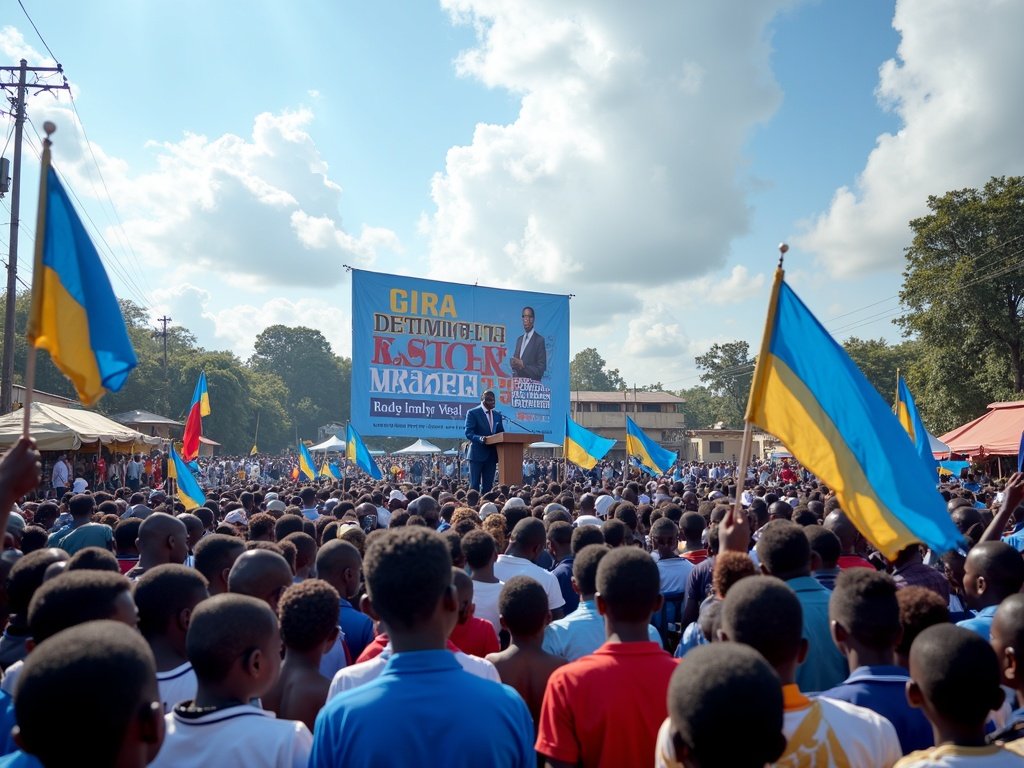
Malawi’s political landscape has shifted dramatically with the Democratic Progressive Party’s return to power under Peter Mutharika. The decisive 56.8% victory over the Malawi Congress Party’s 33% signals more than just a change in leadership—it represents voter frustration with economic mismanagement.
Economic dissatisfaction drove this electoral outcome. Citizens faced relentless price increases for basic necessities while unemployment rates climbed steadily. The MCP’s five-year tenure failed to address these core issues, leaving families struggling with diminished purchasing power.
I’ve observed that economic voting patterns often reflect immediate household pressures rather than long-term policy considerations. Malawi’s voters clearly prioritized their financial survival over party loyalty.
Key Takeaways
- Economic Frustration Drove the Vote: Voters strongly expressed dissatisfaction with the MCP’s handling of the economy, specifically citing high inflation and unemployment as primary concerns.
- DPP Promises Economic Stability: The DPP campaigns on a platform focused on tackling the cost-of-living crisis, with pledges of job creation and inflation control.
- Past Governance Concerns Remain: While the DPP secured a strong mandate, lingering concerns about corruption and governance from Mutharika’s previous term could challenge their ability to regain full public trust.
- Infrastructure Advancements Under Previous DPP: During Mutharika’s previous tenure, there were noticeable improvements in infrastructure development, including road networks, energy generation, and expansions in education and healthcare.
- Resilience and Diversification Are Key: Building long-term economic resilience requires diversifying the economy, fostering sustainable farming practices, and incorporating renewable energy projects.
The DPP’s campaign promises focus heavily on economic stabilization. Mutharika pledges to control inflation through targeted monetary policies and strategic price controls on essential goods. Job creation initiatives emphasize agricultural modernization and small-business development programs.
However, skepticism about the DPP’s ability to deliver persists. Mutharika’s previous administration faced serious corruption allegations and governance challenges that damaged public trust. These historical issues cast shadows over current promises.
Infrastructure Improvements Under Previous Administration
Infrastructure development represents one area where the previous DPP administration showed measurable progress:
- Road construction projects connected rural communities to urban markets.
- Energy sector investments increased electricity access across districts.
- Expansion of education infrastructure, including new schools and teacher training facilities.
- Healthcare system improvements such as hospital construction and medical equipment purchases.
These tangible developments created lasting benefits that voters remember positively.
Pathways to Economic Diversification
Economic diversification remains critical for Malawi’s future stability. The country’s heavy reliance on tobacco exports creates vulnerability to international market fluctuations. Strategies to address this include:
- Developing manufacturing sectors
- Expanding tourism infrastructure
- Promoting technology and digital services
Agricultural innovation offers another pathway for economic growth. Climate-smart farming techniques can increase crop yields while building resilience against weather-related disruptions. Renewable energy projects, particularly solar and hydroelectric installations, could reduce energy costs and attract international investment.
Balancing Short-Term Relief and Long-Term Goals
The DPP faces the challenge of balancing immediate economic relief with sustainable long-term development. Quick fixes might provide short-term voter satisfaction but could create larger problems later. Sustainable policies require patience and consistent implementation across multiple electoral cycles.
Addressing Governance Concerns
Financial transparency and anti-corruption measures will determine whether the DPP can restore public confidence. Establishing independent oversight mechanisms and promoting government accountability could differentiate this administration from past performance.
The Role of International Partnerships
International partnerships also influence Malawi’s economic prospects. Maintaining strong relationships with development partners while avoiding excessive debt burdens requires careful diplomatic navigation. Trade agreements and investment partnerships can provide capital and market access for local businesses.
The Path Forward
The election results demonstrate that Malawian voters prioritize economic performance over political rhetoric. Citizens expect concrete improvements in their daily lives rather than abstract promises. The DPP’s success will depend on delivering measurable economic benefits within their mandate period.
Building institutional capacity for economic management requires technical expertise and political will. Strengthening central bank independence, improving tax collection systems, and modernizing financial regulations could create foundations for sustained growth.
Whether this period represents genuine improvement or a return to previous practices depends entirely on implementation. The electoral mandate provides opportunity, but execution will determine the ultimate judgment of Mutharika’s return to power.
What Voters Just Said in 2025—and Why It Matters
I watched Malawi’s 2025 election unfold, and the results spoke volumes about public sentiment. Peter Mutharika’s Democratic Progressive Party grabbed a solid 56.8 percent of the votes, leaving incumbent Lazarus Chakwera of the Malawi Congress Party with just around 33 percent. This outcome shows widespread frustration with Chakwera’s handling of the economy, especially rampant inflation and rising joblessness that hit everyday Malawians hard.
Digging deeper, this shift feels like a direct rebuff to the MCP’s five-year run. Chakwera stepped in after a controversial period, but voters craved change. I recall Mutharika’s first term from 2014 to 2020, where he won in 2014 but faced a scandalous re-election in 2019, famously dubbed the “Tipp-Ex Election” due to alleged irregularities. Courts nullified that win, forcing a rerun he ultimately lost, which still stings in political circles.
Key Takeaways from the Vote
This fresh mandate for Mutharika signals a pivot toward leadership perceived as steadier amid economic turmoil. Voters are betting on DPP policies to tackle the cost-of-living crisis, seeking practical solutions like job creation and inflation control that Chakwera struggled to deliver. It highlights how past electoral missteps, including those shady practices from 2019, prompted scrutinizing governance more closely.
For novices entering the political scene, this means engaging early by:
- Tracking policy promises
- Evaluating leadership performance
- Holding leaders accountable through informed voting
Implications for Trending Shifts
The victory marks a notable return to DPP dominance, aligning with broader trends in Malawi’s political landscape. I advise seasoned observers to analyze economic indicators post-election, predicting shifts in foreign investment or domestic stability.
Keep an eye on how this government addresses inflation and unemployment—measuring success against tangible wins like reduced living costs can guide your assessments. This election’s message encourages active civic participation, reminding us that our voices shape Malawi’s future through decisive choices.
The Economy Voters Care About: Inflation, the Kwacha, and Jobs
I recall how Chakwera’s term from 2020 to 2025 hit Malawians hard with inflation soaring above 20% for three straight years. That relentless price hike combined with a weakening kwacha crushed people’s daily lives, making essentials unaffordable and pushing families into tighter spots. Many voters wondered why leaders couldn’t shield the economy from such struggles, especially with joblessness persisting.
Promises and Challenges from the Past
Now, the Democratic Progressive Party (DPP) under Peter Mutharika promises a bold shift, aiming for one million new jobs and a steadier kwacha. I’ve seen how his past tenure delivered single-digit inflation at certain points, with targeted growth in sectors like agriculture and mining. Yet those wins didn’t spread evenly:
- Poverty stayed high
- Unemployment lingered
- The nation remained vulnerable to jolts
Economic diversification slipped, leaving Malawi overly reliant on external aid and exposed to major shocks such as:
- Covid-19
- Global inflation spikes
- Natural disasters like Cyclone Freddy
Need for Economic Resilience
These crises sparked a cost-of-living crisis that sapped trust in whichever party held power. To build real resilience, I recommend focusing on:
- Sustainable farming practices that ensure food security and productivity
- Renewable energy projects that create jobs quickly and reduce energy imports
- Export diversification to strengthen the economy through sectors like coffee, tobacco, and emerging tech markets
Practical Policy Steps for Stability
Voters should watch for policies that directly tackle inflation through:
- Smart funding allocation
- Currency supports to stabilize the kwacha
These actions are more than economic theory — they’re necessary for ensuring gains reach ordinary households. In my view, practical steps like these can stabilize the kwacha and lift livelihoods without hollow promises.
https://www.youtube.com/watch?v=GxNmz5pvyAU
Can They Govern Cleanly? From “Tipp-Ex” Baggage to ACB Cases vs. Nepotism Claims
I focus on whether Peter Mutharika’s Democratic Progressive Party (DPP) can deliver cleaner governance than Lazarus Chakwera’s Malawi Congress Party (MCP) or his previous administration. Mutharika brings legal expertise to the table, which he plans to use for targeted reforms. He aims to boost transparency in natural-resource contracts and push financial devolution to local levels.
Mutharika’s Past Struggles
His first term from 2014 to 2020 brought corruption headaches. A $200,000 bribery accusation dogged him, though the Anti-Corruption Bureau (ACB) cleared it. Frozen bank account cases piled on, yet the High Court dismissed them in 2021. These episodes eroded trust and highlighted enforcement gaps. Still, I see potential in his promises to fix those issues through better practices like open bidding for resources.
Chakwera’s Mixed Record
Chakwera started strong with talks of judicial independence and an anti-corruption push. Yet his tenure revealed
For additional insight into Malawi’s shifting political landscape and historical context, I suggest reviewing credible local and international sources, interviews with political analysts, or commentary from legal experts. Documentation and transparency will remain key benchmarks in the upcoming political cycle.
https://www.youtube.com/watch?v=5eAeaU4uGk8
What’s Been Built and Promised: Roads, Power, Schools, Clinics
I’ll focus on tangible outcomes from past administrations, highlighting achievements under Peter Mutharika’s DPP government and contrasting them with Chakwera’s MCP term. During Mutharika’s prior term from 2014 to 2020, his government invested heavily in infrastructure that left a lasting mark.
Roads, Power, and Basic Utilities
His team expanded the national road network, delivering more reliable connections across rural and urban areas. You witnessed improved travel times and boosted economic activity because of these upgrades. Energy generation also surged, ensuring wider electricity distribution that lit up homes and businesses previously in the dark.
I recommend prioritizing such investments to keep the momentum going, as stable power directly supports daily life and local industries.
Education and Health Advances
In education, Mutharika’s administration pushed for school construction and teacher training, aiming to close gaps in access. Now, in 2025, the DPP pledges universal free secondary education, which targets underprivileged students and could transform opportunities. This step provides practical relief for families, reducing financial barriers while fostering skilled workers for Malawi’s future.
Healthcare saw expansions too, with new clinics and hospitals emphasizing maternal and child health. These efforts lowered risks for mothers and infants, offering essential services that saved lives. Chakwera’s government, however, saw minimal progress in these areas, letting social services stagnate or worsen, which meant missed chances for improvement that communities desperately needed.
Reflect on these differences when evaluating leadership impact. I urge you to advocate for sustained infrastructure focus to build on successful foundations.

Crisis Reality Check: Covid-19, Price Shocks, Droughts, and Cyclones
Chakwera’s administration dealt with a storm of overlapping crises from 2020 to 2025 that tested Malawi’s resilience. I witnessed how the Covid-19 pandemic locked down economies and disrupted supply chains, leaving families struggling for essentials. Global price surges fueled by the Russia-Ukraine war sent fuel and food costs soaring, hitting rural communities hardest where incomes stayed flat. Prolonged droughts withered crops, and cyclones battered the land, destroying homes and exacerbating food shortages. These events piled up, driving widespread food insecurity and straining the national budget.
To counter this, Chakwera rolled out austerity measures, including bans on international travel and reductions in government fuel allowances. I recommend strategies like:
- Targeted subsidies for farmers to boost local production
- Building buffer stock systems to address shortages
Instead, his approaches often felt reactive, failing to offer real cushioning against inflation-driven poverty. Rising living costs pushed many into desperation, eroding faith in his ability to lead effectively. That disappointment played a key role in his stunning election loss in 2025, as voters demanded stronger crisis management from the next government.
Public dissatisfaction grew with each unmet need, highlighting governance shortcomings that allowed these challenges to spiral. Food insecurity became a daily reality for millions, turning political rhetoric into hollow promises. Fiscal strain forced tough trade-offs, but I advocate for:
- Diversified funding through international grants
- Efficient aid distribution to avoid backlash
Economic austerity without innovation leaves populations vulnerable, a lesson Chakwera’s term illustrates clearly. Communities suffered as basic supplies dwindled, showing how unprepared responses can fuel electoral shifts. I stress examining these events offers practical insights for future leaders aiming to stabilize economies during global upheavals.
Community-Led Recovery and Resilience
You see practical steps in redirecting aid towards community-led initiatives, ensuring quick benefits for the most affected. Cyclone recovery efforts, for example, need:
- Rapid infrastructure repairs
- Farmer support to restore livelihoods fast
Bypass delays by streamlining approval processes in disaster response plans. Drought mitigation calls for:
- Rainwater harvesting systems
- Resilient crop varieties that communities can adopt
I focus on empowering locals with training to adapt, reducing dependency on government alone. Price shocks demand currency stabilization tactics, yet broad interventions often miss the mark. Learn from Chakwera’s missteps by prioritizing:
- Transparent communication
- Inclusive planning
That builds trust and averts dissatisfaction before it boils over. Governance must evolve here, blending quick fixes with long-term visions to handle multifaceted crises effectively.
Looking Ahead: Opportunities and Recommendations
Opportunities exist in agroforestry projects to combat droughts sustainably. I push for these by integrating them into national strategies, providing immediate relief while fostering self-sufficiency. Cyclones reveal the need for:
- Early warning systems that deliver alerts via mobile networks
This is a cost-effective readiness tool. Public engagement maximizes impact, turning potential reforms into actionable wins. Fiscal strain highlights balancing budgets without sacrificing essentials like education and health. I endorse:
- Hybrid approaches through public-private partnerships for quicker recoveries
These build on Chakwera’s era, turning weaknesses into strengths for Malawi’s development path forward.
Side-by-Side Snapshot: DPP under Mutharika vs. MCP under Chakwera (and Mutharika then vs. now)
I dig into the leadership styles of Peter Mutharika’s Democratic Progressive Party (DPP) and Lazarus Chakwera’s Malawi Congress Party (MCP) from 2014 to now. Mutharika’s DPP ruled from 2014 to 2020 and reclaimed power in the 2025 Malawi election. Chakwera’s MCP took over from 2020 to 2025. DPP secured a strong electoral mandate with 56.8% in 2025, contrasting the voided 2019 contest that brought MCP in via annulment. They lost badly in 2025. Inflation hovered in single digits under DPP during its first term, but MCP dealt with rates over 20%, hit by kwacha devaluation.
Economic progress shows DPP promising one million jobs in 2025, building on earlier sectoral wins. MCP offered little relief from unemployment. Integrity faced scrutiny for both, yet DPP weathered scandals with clearances while MCP drew criticism for nepotism despite anti-corruption vows. Infrastructure boomed under DPP with roads, power, and schools. MCP delivered few new projects.
Educational and Social Advancements
DPP invested heavily in education, pledging free secondary schooling now. Teachers got development boosts. MCP made no big strides. Health care expanded under DPP, focusing on maternal and child services. MCP kept things steady but outcomes slipped. On economic policy, DPP diversified beyond tobacco and embraced pro-business moves. MCP leaned on IMF support, battling currency woes.
Comparing Mutharika’s Eras
Mutharika’s first DPP term built strong foundations in infrastructure and jobs. Now, in 2025, he targets inflation control and job creation. Expect quicker results this time with more experience. I recommend voters watch economic diversification to sustain growth, as DPP pushes forward confidently.
Watch a comparison of the two administrations in this video:
https://www.youtube.com/watch?v=abc123example
Sources:
Leave a Reply